
From trade-finance workflow to Agentic AI
Introduction
This is an articles in which I explore areas of business banking that can benefit from Artificial Intelligence, Generative AI and Agentic AI. The intent is to explain complex banking concepts in simple language, illustrate the underlying processes, and then identify where AI may create value.
How to read this article
The article first gives an overview of trade finance, then describes one product — an import Letter of Credit — in detail. It follows the transaction step by step, identifies points where AI agents could intervene, and closes with potential benefits for customers and the bank.
Trade: from simple exchange to complex ecosystems
Trade can be as simple as a buyer paying a local seller in cash, with no paperwork, no time gap and almost no banking involvement. At the other extreme, international trade may involve the buyer, seller, both banks, shipping companies, customs, import/export agents, inspectors and valuers. The value of trade finance is largely in coordinating risk, documents, payment and trust across this more complex ecosystem.
Import Letter of Credit — flow of goods, documents and money
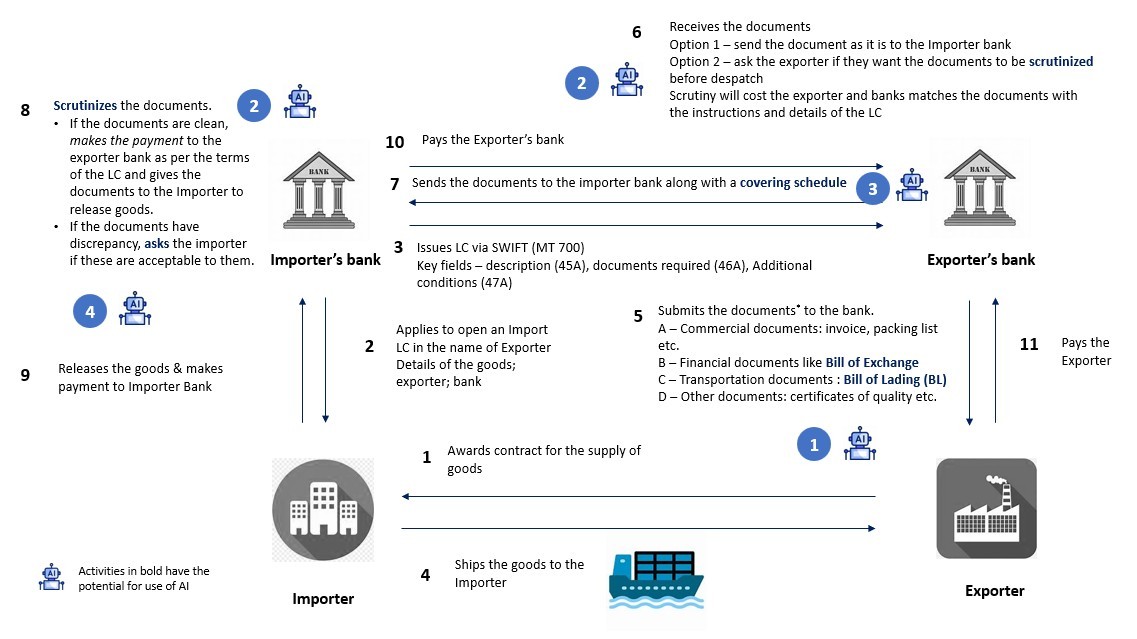
Step 1 — Importer awards the supply contract
The importer communicates the required goods, specifications, price and contractual terms to the exporter.
Step 2 — Importer applies for an Import LC
The importer asks its bank to open an Import Letter of Credit in favour of the exporter. The LC addresses the exporter’s concern about the importer’s creditworthiness by introducing a bank undertaking to pay once the agreed obligations are fulfilled.
Step 3 — Importer’s bank issues the LC through SWIFT
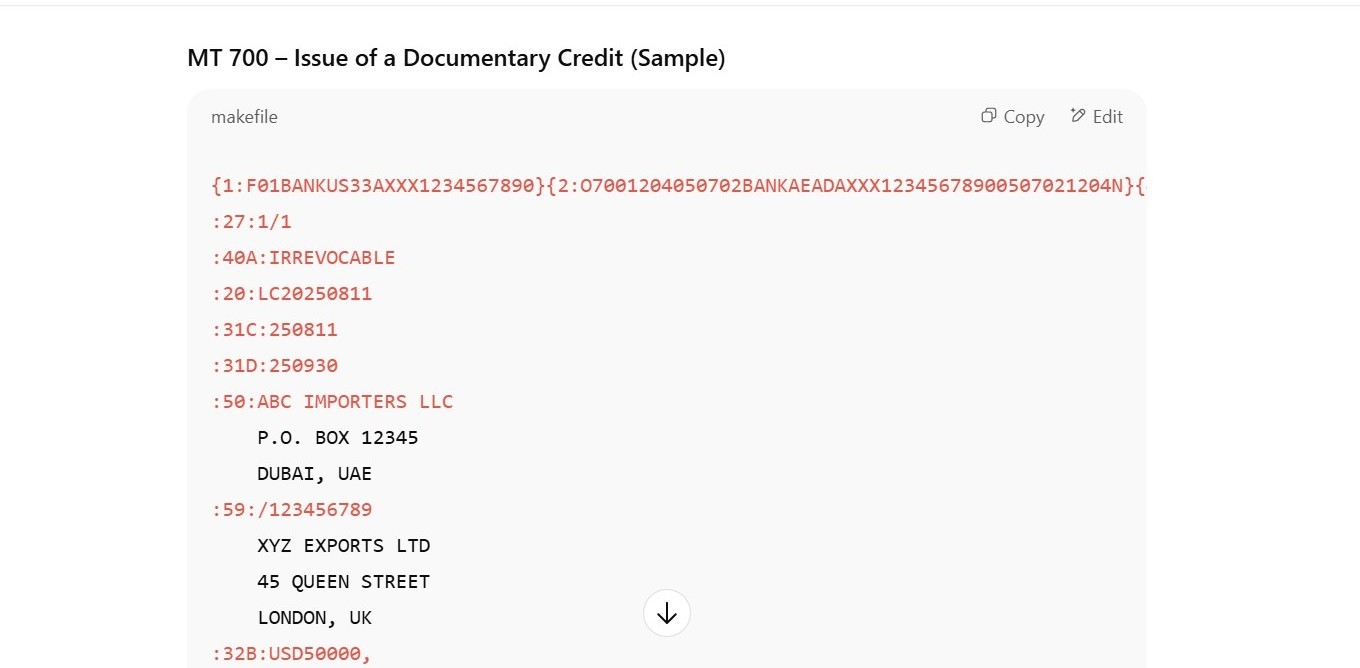
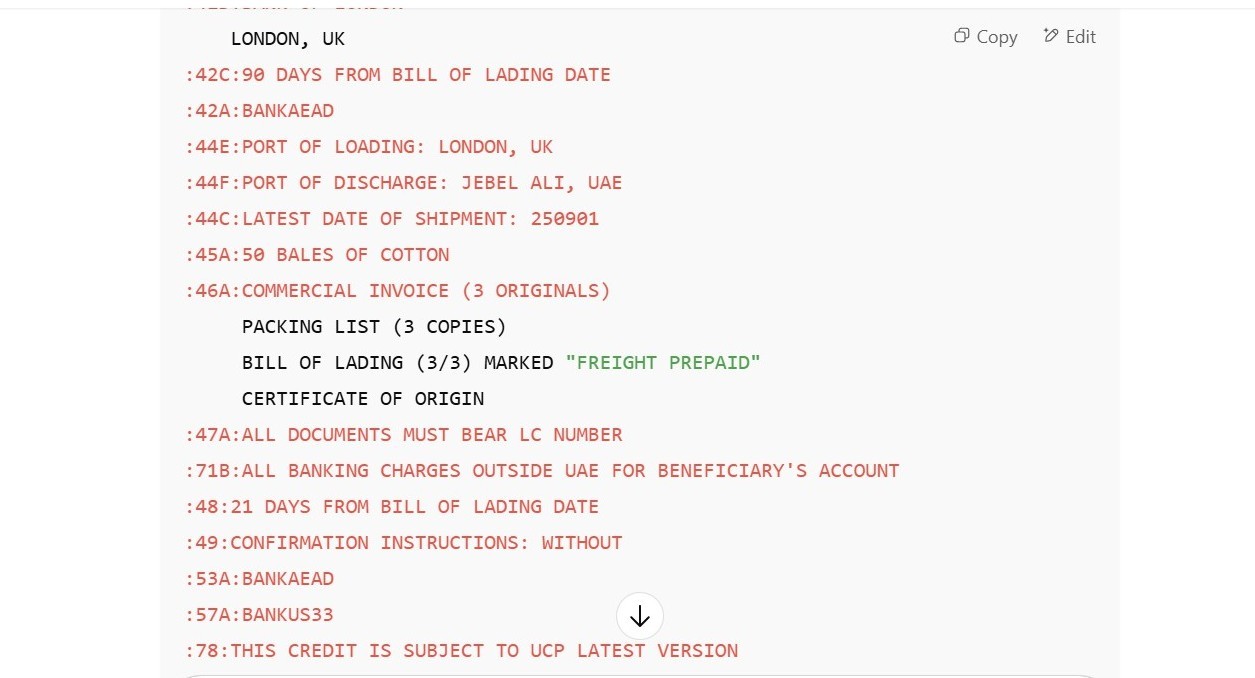
The importer’s bank sends the LC using SWIFT MT700. Important fields include the description of goods (45A), documents required (46A) and additional conditions (47A). The bank is effectively communicating the transaction terms and its payment undertaking to the exporter’s bank.
Step 4 — Exporter ships the goods
The exporter dispatches the goods by sea, road or another agreed mode, in line with the commercial contract and applicable trade terms.
Step 5 — Exporter submits documents to its bank
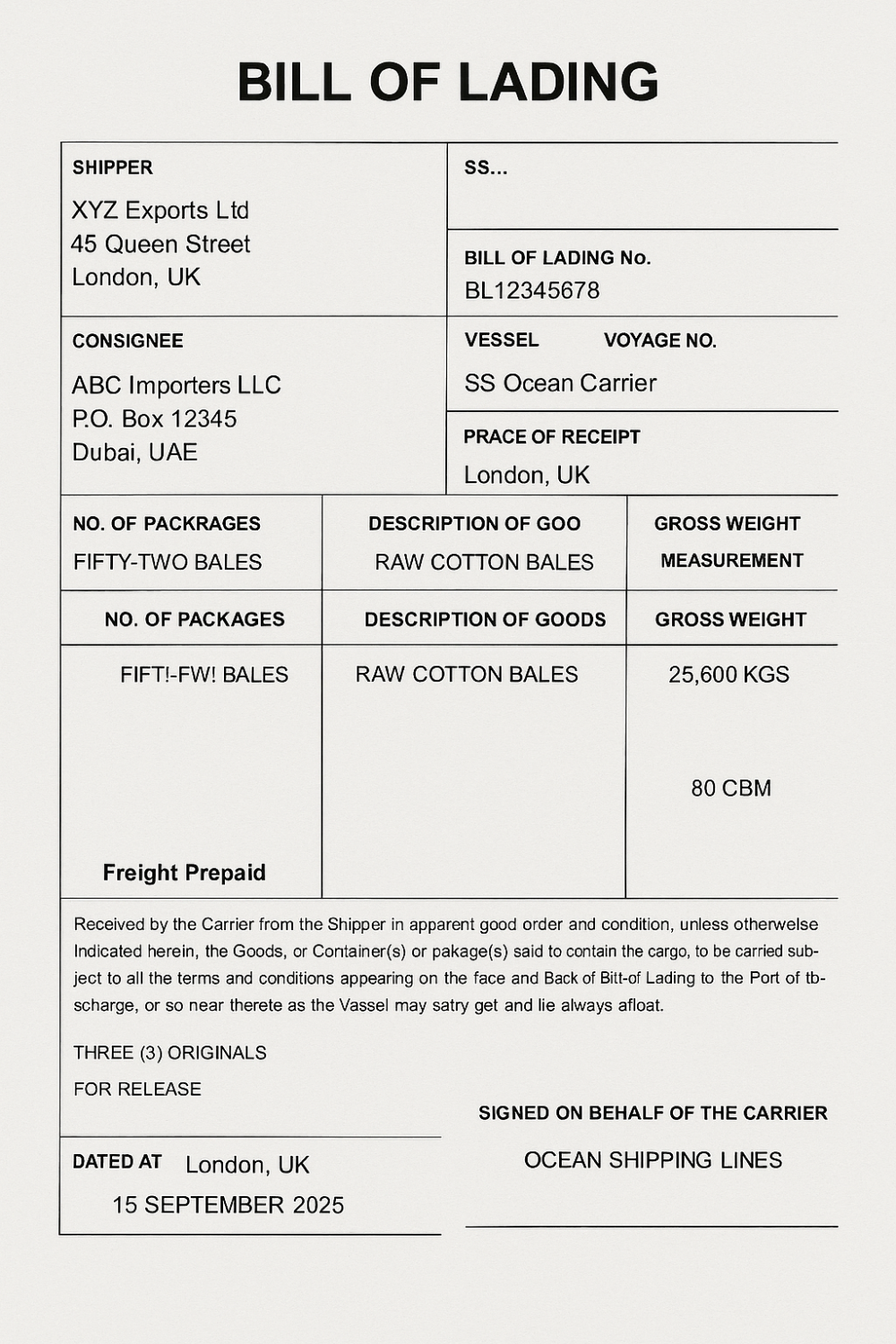
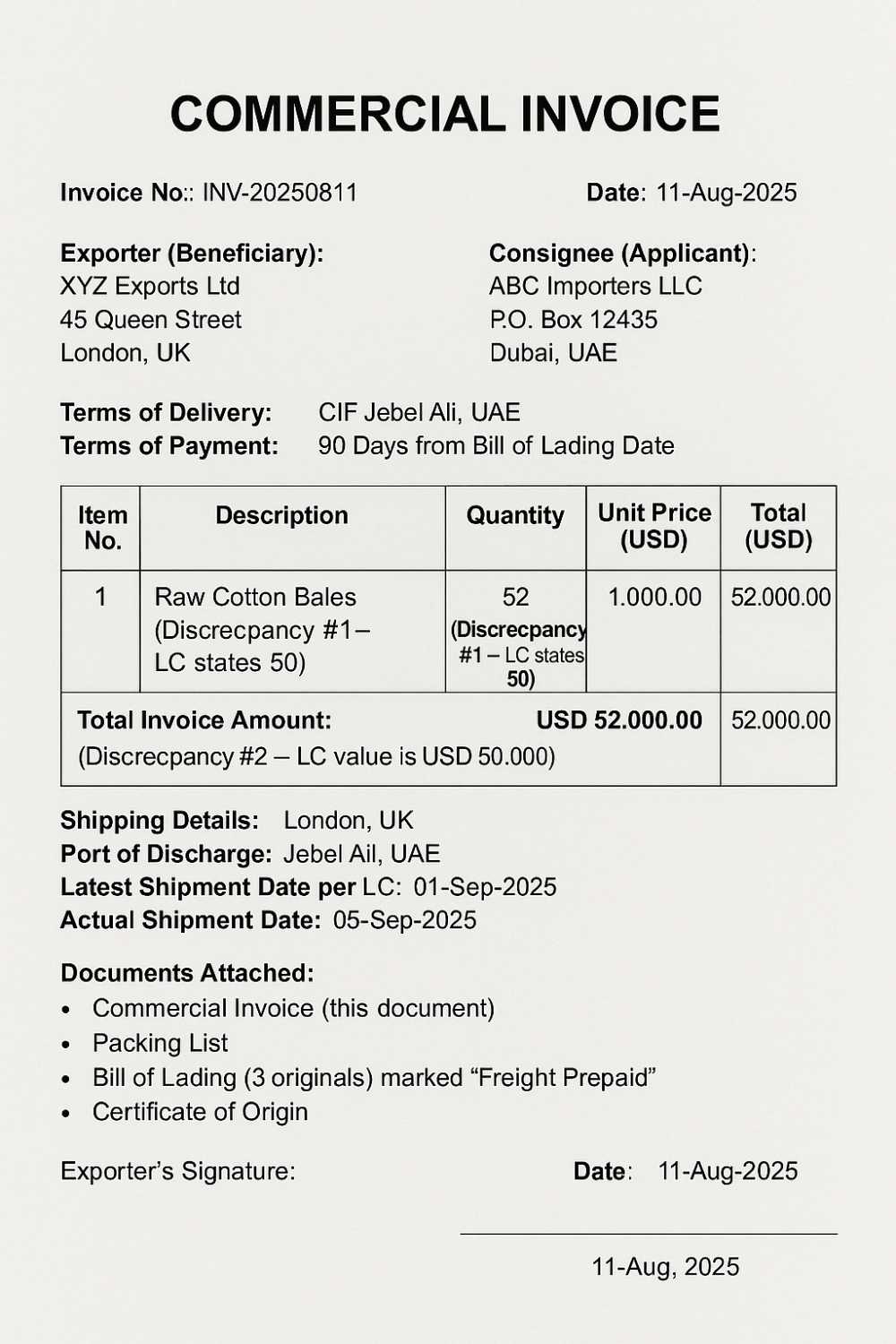
Documents can include commercial documents such as invoices and packing lists, financial documents such as a Bill of Exchange, transportation documents such as a Bill of Lading, and certificates of quality or origin. These documents are often non-digital.
AI Agent 1: document vision can read these documents, extract fields and create structured digital records instead of requiring a bank employee to key the information into the OLTP system.
Step 6 — Exporter’s bank receives and scrutinizes the documents
The exporter’s bank may send the documents as received or, if requested, scrutinize them before dispatch. Scrutiny requires comparing the LC instructions with documents such as the invoice and Bill of Lading.
AI Agent 2: perform document scrutiny and identify discrepancies across the LC, invoice, Bill of Lading and other required documents.
Step 7 — Exporter’s bank sends documents with a covering schedule
The covering letter lists the documents and any identified discrepancies.
AI Agent 3: draft the covering letter and prepare it for dispatch.
Step 8 — Importer’s bank scrutinizes the documents
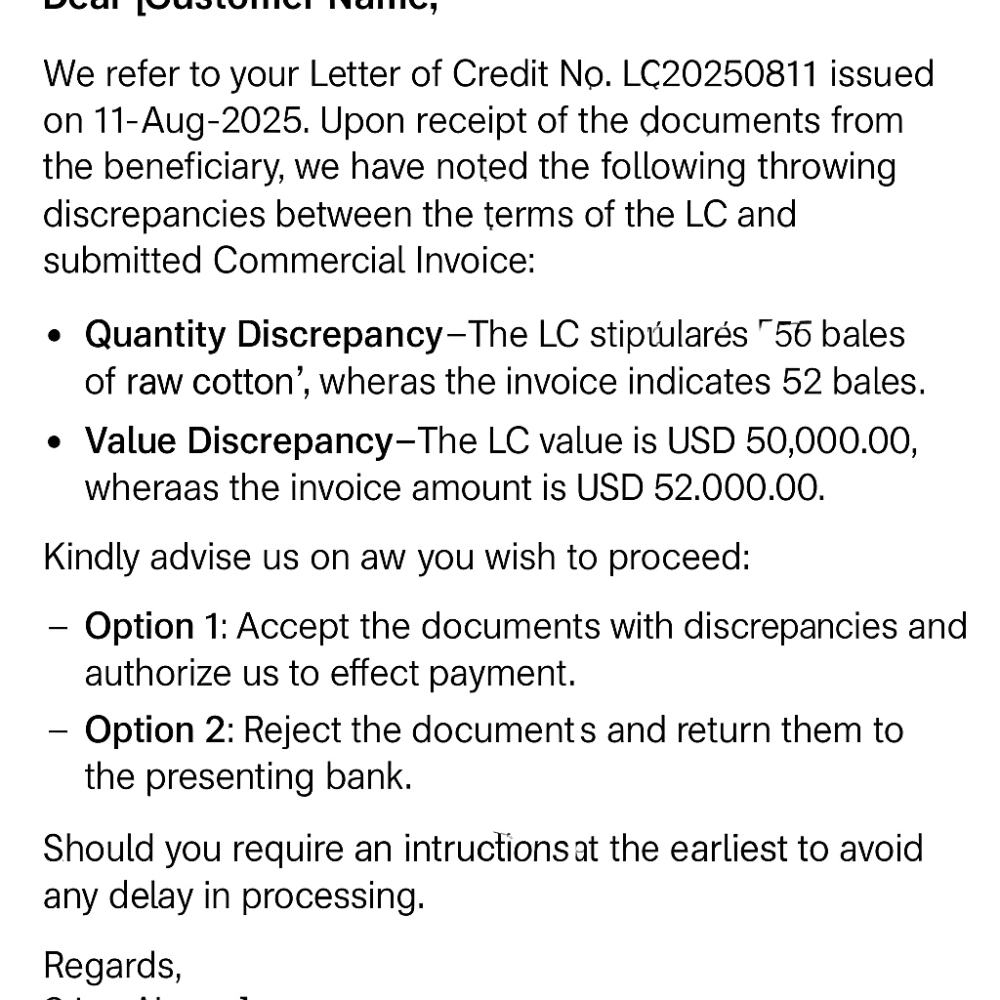
If documents are clean, the importer’s bank proceeds according to the LC terms. If discrepancies exist, the importer is asked whether they are acceptable.
AI Agent 2 can again perform discrepancy checks, while AI Agent 4 can draft communication to the customer requesting acceptance or rejection of the discrepancies.
Steps 9–11 — release of goods and settlement
The importer uses the documents to release the goods and settles with its bank. The importer’s bank pays the exporter’s bank, which in turn pays the exporter.
What the AI agents would actually work with
Benefits
Faster and more accurate processing
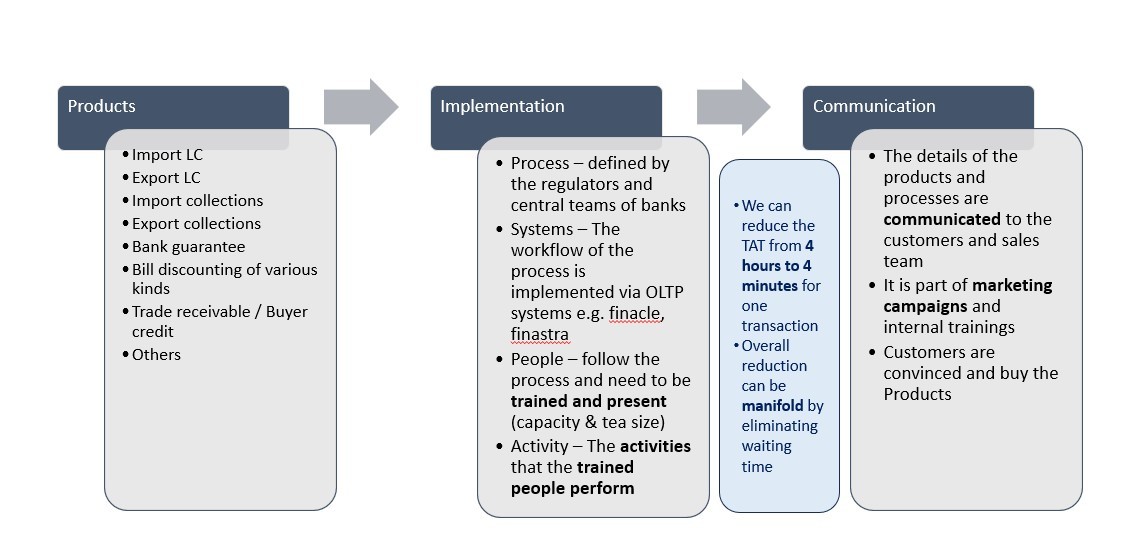
The source article estimates that the operational work involved in one LC can take around four hours and, after queueing, the customer’s elapsed time may stretch across several days. Automating document reading, matching, drafting and customer communication has the potential to compress much of this work into minutes while reducing dependency on scarce trained staff.
Customer experience
Faster document processing means faster clearance, fewer avoidable delays and earlier realization of payment for customers that have shipped goods.
Business growth
A bank that can promise faster and more accurate trade processing can create a differentiated value proposition. This can also complement transaction network analysis: network analytics can identify trade counterparties, while an automated and responsive trade process provides a reason for those counterparties to move business to the bank.
Expansion to other trade-finance products
The same logic can extend beyond import LCs. Trade-finance products generally facilitate buyer–seller transactions through defined services, workflow systems and trained staff. Agentic AI can potentially automate part of those workflows while retaining appropriate human supervision.
Selecting the right LLM
In the previous article, I described an import LC workflow and the stages where AI agents could support document capture, scrutiny, drafting and customer communication. This article moves from the business use case toward implementation and focuses on the first decision: model selection.
Six pillars of an Agentic AI solution
- Models — select the model that gives the agent its intelligence.
- Customization — fine-tuning, distillation or domain-specific prompts.
- AI Tools — allow the agent to access enterprise knowledge and take real-world actions.
- Orchestration — connect agents so they can manage the overall process.
- Observability — test and monitor agents with logs, traces and evaluations.
- Trust — add identity management, content filtering and controls before granting greater autonomy.
Model selection
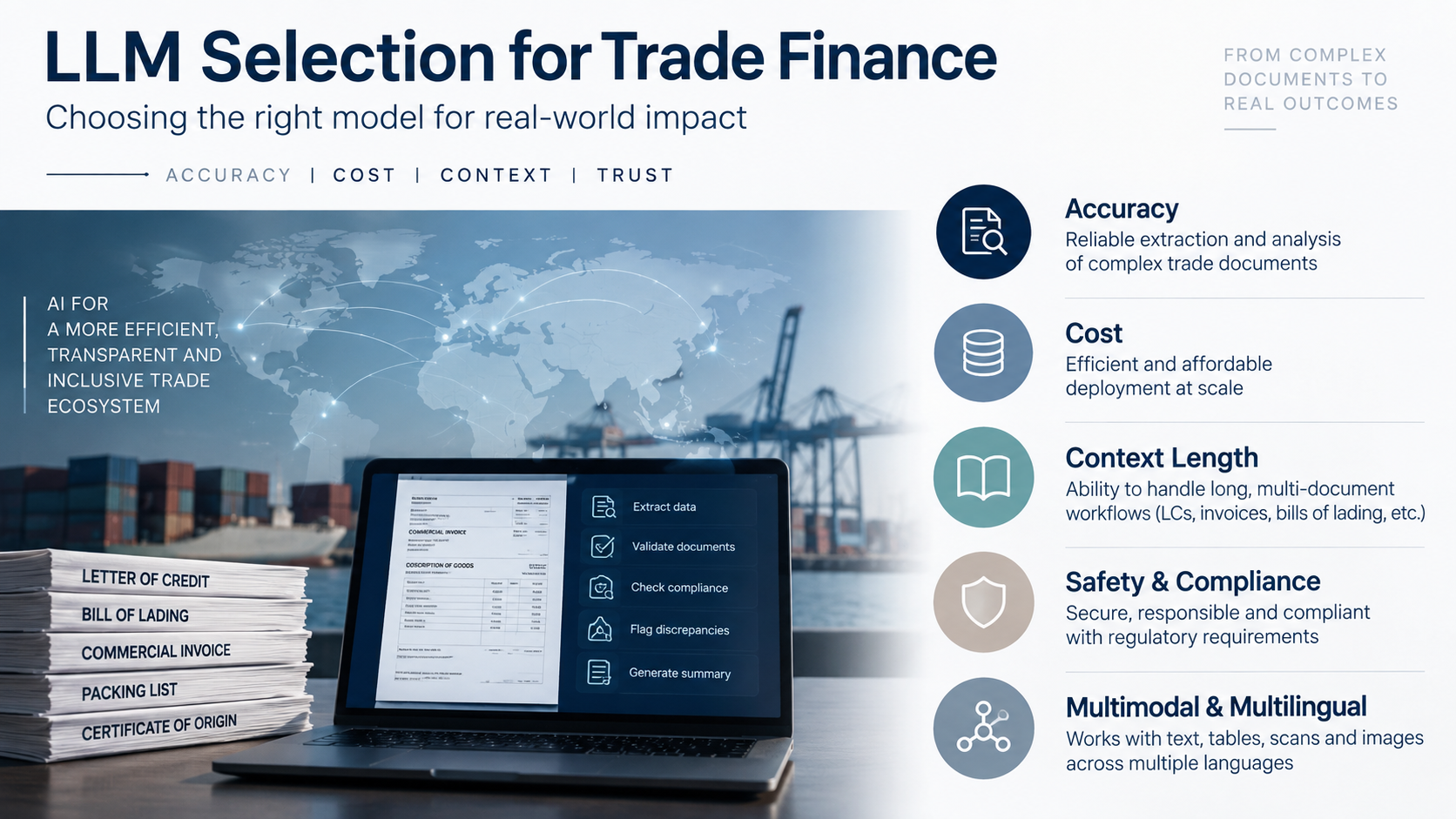
The source article notes that Azure AI Foundry provides access to a very large model catalogue. That makes selection itself an important implementation decision. The model catalogue can be evaluated using dimensions such as quality, safety, cost and throughput.
For this use case, I selected information retrieval as the relevant task and concentrated on the tension between cost and accuracy. The broader trade-finance context adds requirements for long context, multiple languages and image/document understanding.
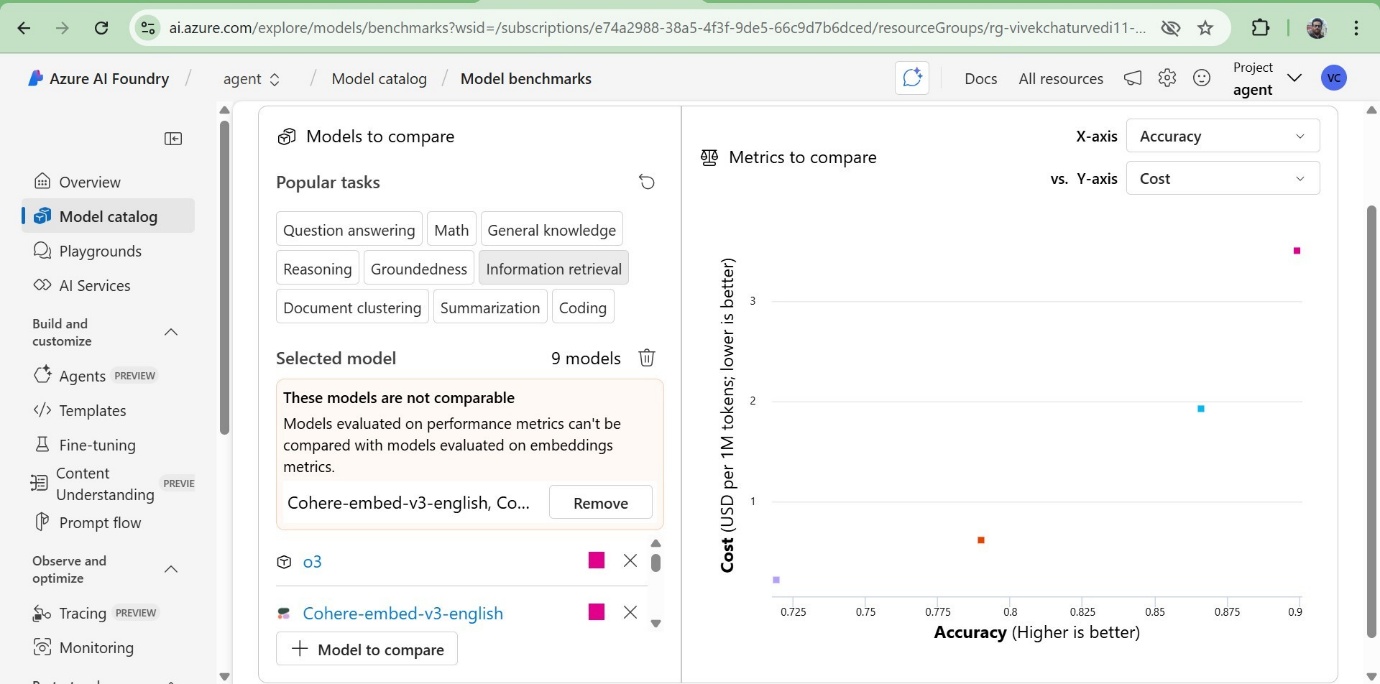
Calculation of cost
LLM pricing is generally based on tokens consumed. To make the comparison concrete, the article uses the following illustrative scale assumptions.
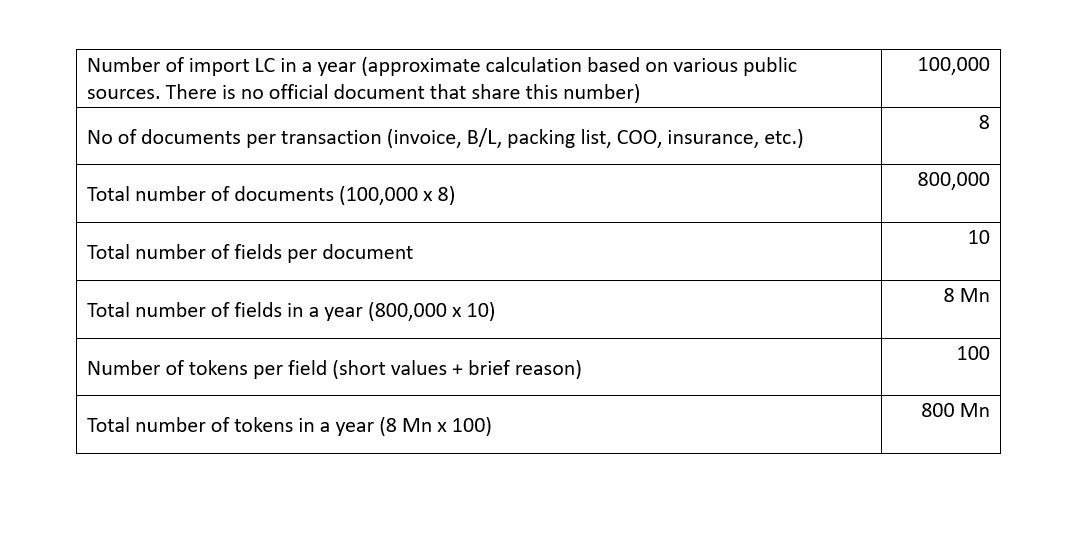
- 100,000 import LCs a year.
- 8 documents per transaction.
- 800,000 documents in total.
- 10 fields per document.
- 8 million fields a year.
- 100 tokens per field, including a short rationale.
- 800 million tokens per year.
Candidate 1 — Microsoft Phi-4
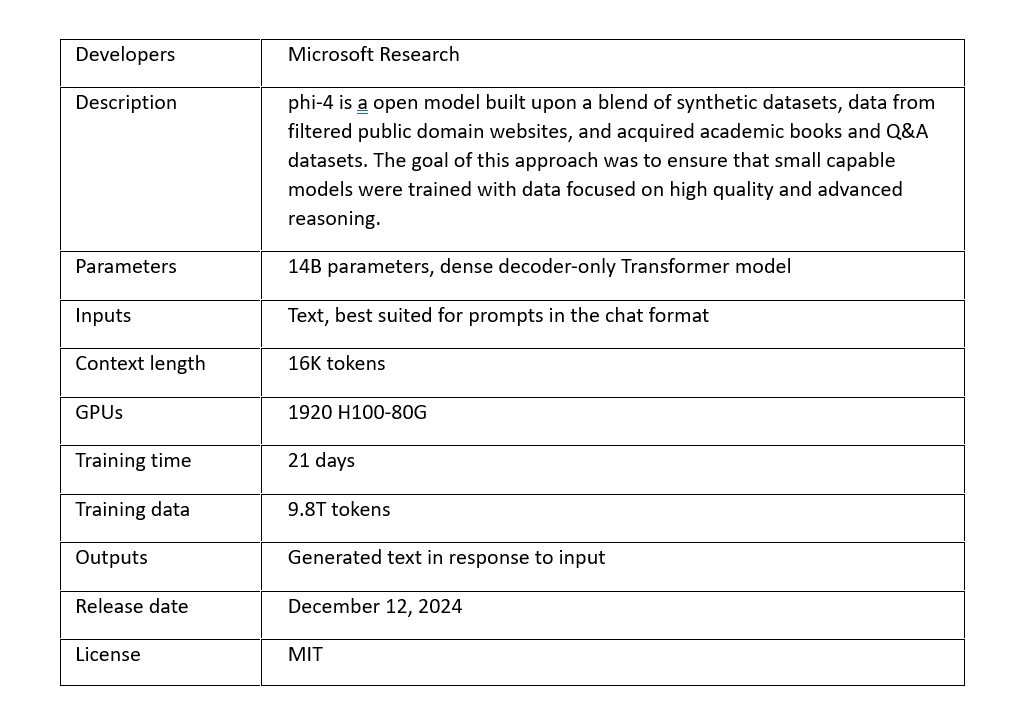
The model is attractive on cost and is a dense decoder-only transformer designed primarily for text. The source material highlights a 16K context length and English-centric training.
The key limitation for this use case is language coverage. Trade finance involves customers in multiple countries and documents can arrive in multiple languages. The cited model documentation states that Phi-4 is primarily trained on English and is not intended to support multilingual use.
Illustrative annual cost: 800 million tokens × USD 0.22 per million tokens = USD 176.
Candidate 2 — Llama 4 Maverick
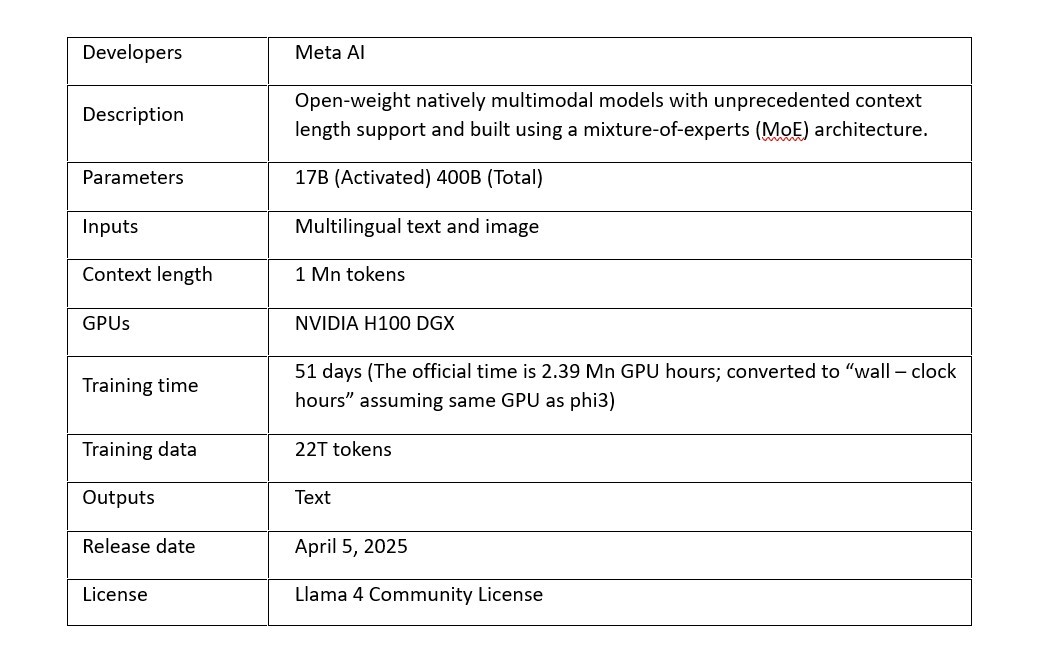
The source article highlights two advantages for the trade-finance use case: the model can take both text and image as input and its documentation describes pre-training across a large number of languages. It also has a much larger context window than the Phi-4 example.
These characteristics matter because the inputs in trade finance are both document-heavy and cross-border. A practical solution may need to interpret scanned documents, tables and multiple languages within the same operational process.
Illustrative annual cost: 800 million tokens × USD 0.62 per million tokens = USD 496.
Comparison
Phi-4
Input: Text
Context: 16K tokens
Language: Primarily English
Illustrative annual token cost: USD 176
Llama 4 Maverick
Input: Multilingual text + image
Context: 1M tokens
Language: Multilingual
Illustrative annual token cost: USD 496
Conclusion
For the specific criteria used in the article, I would choose Llama 4 Maverick over Phi-4. The absolute difference in estimated token cost is small relative to the operational use case, while multimodal input, multilingual capability and longer context are more closely aligned to the realities of trade-finance documents.